Commercial & Residential
Public Insurance
Adjusters
Insurance adjusters represent the insurance carriers,
We represent you!
Put a professional in your corner.
At Morrison & Morrison, Inc. we know the claims process. We are specialists in documenting claims, determining the true value of claims, presenting claims for payment and resolving claims. As public insurance adjusters, we advocate for the insurance consumer. We handle property losses and business interruption losses.
From homeowner to commercial devastation and everything in between, we can help!
Did You Know
A Public Insurance Adjuster…
- Works on the insured’s behalf with their best interests in mind.
- Prepares claims for presentation to the insurer, saving you time, agony, and money.
- Streamlines the claims process by dealing with the insurance company on your behalf.
- Helps you recover the benefits you are entitled to under your policy.
We adjust claims
of many types…
- Hurricane damage, tornado, and windstorm damage
- Flood, wind driven water and other water-related damage
- Hail damage
- Fire & Smoke
- Explosion & Building Collapse
- Business Interruption
Businesses owners
trust Morrison & Morrison.
Farley Fontenot of Quantum Sails experienced mass damage to his sail loft and home from Hurricane Ike. Mr. Fontenot was not only dealing with his windstorm insurer, but also his flood insurer. Morrison & Morrison was able to successfully assist Mr. Fontenot with his Hurricane Ike insurance claims on both his business and his home so that the road to recovery could begin.
Homeowners trust
Morrison & Morrison.
The Putman’s experienced mass damage to their home from Hurricane Ike and for all intents and purposes the home was a total loss. The Putman’s were not only dealing with their windstorm insurer, but also their flood insurer. Morrison & Morrison was able to successfully assist the Putman’s with their Hurricane Ike insurance claim resolution and put them on the road to recovery.
Our Services
Property documentation
Risk management consulting
Claim submission
Claim negotiation
Insurance policy analysis
Appraisal services
Umpire services
Litigation support services
Expert witness consulting
Business loss consulting
Where we’re licensed.
Our corporate office is located in Texas, our home licensing state, however we are licensed in many states across the U.S.
and we work on a national and international basis.
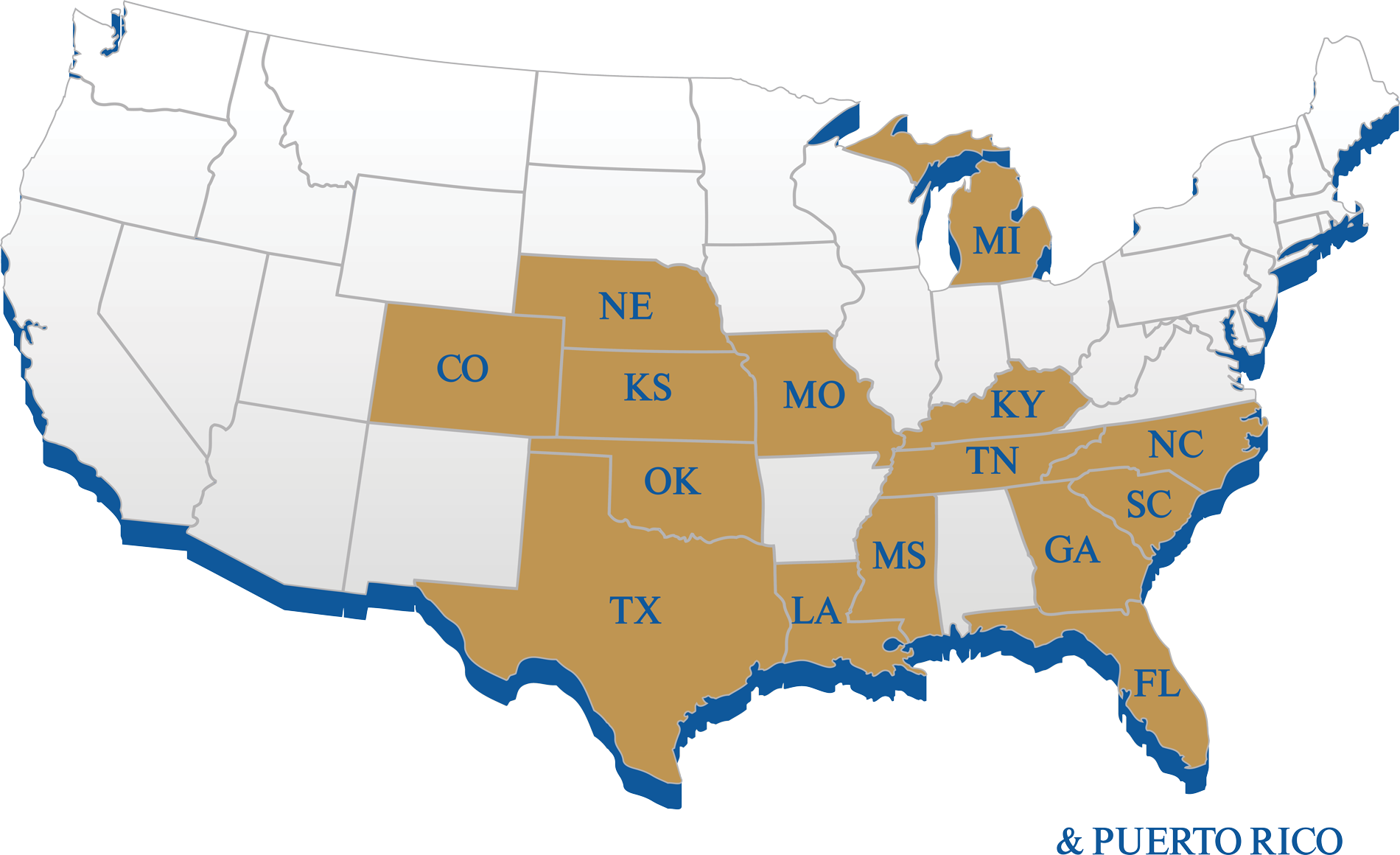
*Most states offer reciprocity with the home state and our firm regularly obtains reciprocal status when a client needs assistance in states where we don’t maintain an office. This leaves us free to assist just about anyone, anywhere. If you have any questions regarding our ability to assist you in your state give us a call.
**Licensing changes from time to time so call the office to determine if we are licensed in your state currently.
News & Articles
Florida’s Insurance Regulator Buried a Completed Report That Raised Red Flags About Insurer Affiliate Profits
Yesterday’s testimony before the Florida House Insurance & Banking Subcommittee ripped the [...]
Florida’s Secret Insurance Scandal: Today’s Hearing Exposes the Truth
Something big is happening this morning in Tallahassee. The Florida House Insurance [...]